
From I to We: what happens when worth stops being conditional
What moves people to give without expecting anything back? A reflection on conditional worth, belonging, and the step from I to We.
Last week I sat in the audience at Harald Eia's talk Det store vi in Stavanger. Eia says he doesn't see himself as a particularly sensitive person, yet he has become curious about what happens inside us when we're moved to tears of joy, and why that feeling seems to bind people together.
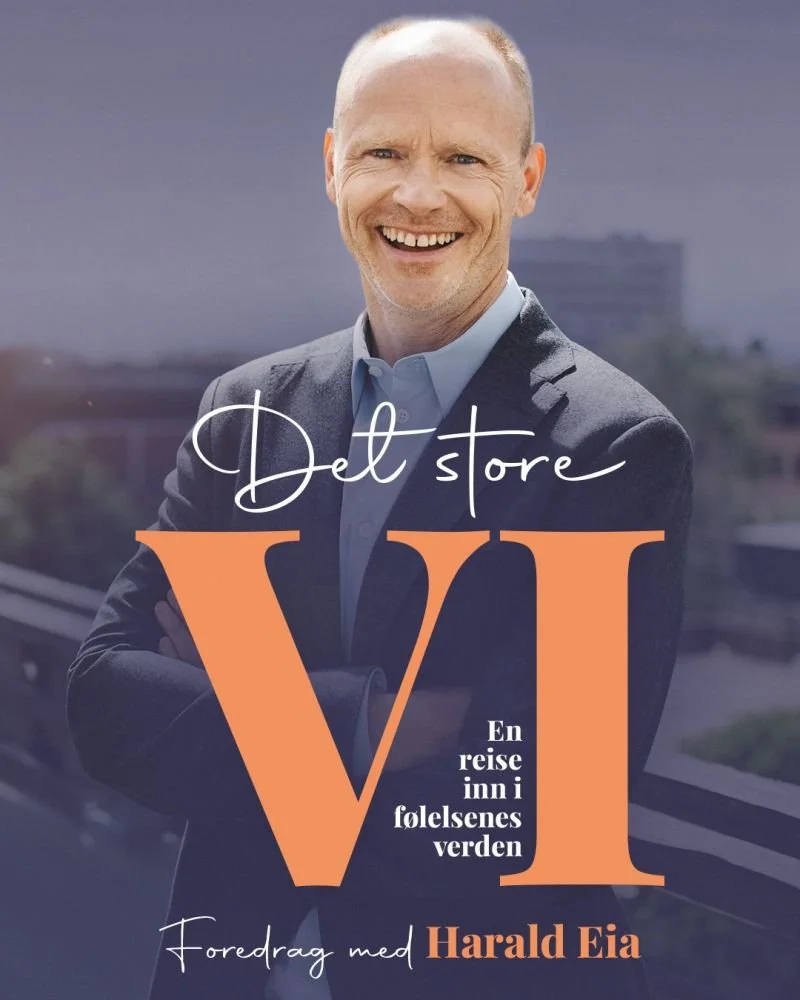
What moved me most was not the research. At one point he shared something deeply personal from his own life, and he teared up, right there on stage. The theatre went completely quiet. Nobody looked away. For a few moments, several hundred strangers were no longer an audience. We were something together.
It struck me that he had done the opposite of what most of us learn to do at work: protect ourselves and look competent. And it was precisely that openness that created the We.
I walked home thinking about my own working life. For many years, part of my job was to look at how organisations work. I established procedures and targets, bonus schemes and job descriptions, and checked whether people did what the system asked of them. Usually they did.
What stayed with me, though, were the moments the system never asked for. Someone who stayed late to fix something nobody had noticed, because she knew the people downstream would struggle otherwise. Someone who quietly covered for a colleague having a hard week. There was no line for those moments in any report. And yet they were often where you could feel an organisation was more than a set of roles: that it was a we.
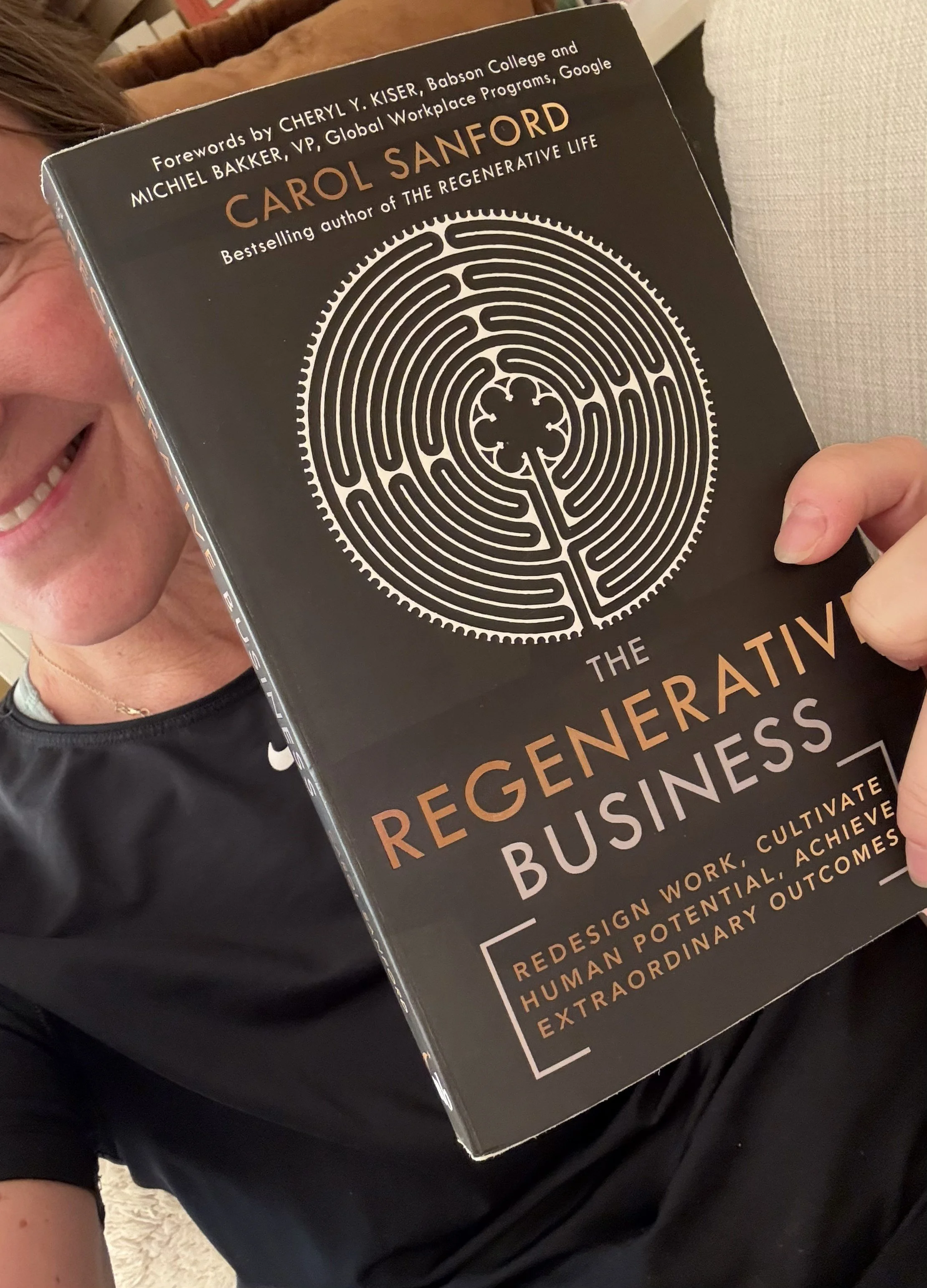
Back home, I picked up a book I had been working my way through: The Regenerative Business by Carol Sanford, who has spent her career helping companies redesign work so that people can grow. Between Eia's talk and her book, I found myself with two lenses on the same question: what actually moves people to give without expecting anything back?
We have built work on if-then
Most of us work inside a quiet logic of conditions. If you hit the target, you get the bonus. If you perform, you get recognised. If you stand out, you move up. It makes sense, and there's nothing wicked about it. It was designed to create fairness, focus and results.
Sanford describes how work design has evolved from managing performance, through supporting human growth, toward what she calls systems regeneration. The last is still rare, and I'll come back to it.
The condition we don't see
This is the part that caught me. When rewards are conditional, something else becomes conditional too, without anyone deciding it: our worth. I matter when I deliver, and I belong as long as I fit in.
The psychologist Carl Rogers had a name for this back in 1959, conditions of worth. It means the unspoken rules we learn early about what we have to be or do to be accepted. Most of us bring them into our working lives without noticing.
From the work we do at Ignited, I've come to see what this does to us physically. When the question "Do I matter?" is never quite answered, the nervous system stays a little on alert. We protect ourselves, and our attention turns inward: my rating, my position, whether I'm good enough. The I stays small, because it is busy guarding itself.
I thought of Eia on that stage. What made the room go quiet was not a performance, but the absence of one.
What surprised me in Sanford's book is her point that even the kinder, human growth approach keeps the condition. It changed the belief about people but not the method. We still steer people from the outside, only more gently. The condition is softer, but it hasn't gone away.
When the I becomes part of a We
Sanford's third way rests on another idea about motivation entirely. She argues that the deepest source of energy in a person is the longing to make a significant contribution to something that matters, and she calls it a quality of "selfless caring".
I have felt that quality from the receiving end. Years ago I had a boss who did things differently. While the other senior vice presidents ate lunch together in their own department, he chose to eat with us. He was the only one who wanted his desk out among his team rather than in a corner office. He invited us home, and out on his boat.
Then I went on sick leave while a report I had been working on was still unfinished. He quietly finished it for me, and when it went out, it had my name on it, not his.
He didn't have to do any of this, and there was nothing in it for him. No system rewards a leader for giving up the executive lunch table or the credit for a report. If anything, the organisation around him rewarded the opposite. But I have never forgotten it. At a time when I couldn't contribute, he made sure I was still part of what we had built together. I didn't feel like an employee on leave. I felt like part of a we.
Looking back, I think that feeling didn't start with the report. It started at the lunch table.
That is the shift I keep coming back to. The motivation no longer comes from what I get. It comes from what I'm part of, and from what I can make possible for others.
We all know this feeling on a larger scale too. The candles outside the Palace when King Olav died, when a whole nation stood quiet together. Or in the summer of 2026, when Norway played in the World Cup and strangers hugged each other in pubs and squares. Nobody was paid to feel it. Nobody was rewarded for showing up. And yet those are among the moments many of us remember most clearly.
I think this is what Eia was circling from the stage. The feeling that makes our eyes sting is rarely about getting something. It comes when we see someone give, include or reunite, and suddenly sense that we're part of something together. Researchers who study this feeling describe it as a sudden experience of communal sharing: relationships where nobody keeps score. It's the opposite of the if-then logic most workplaces run on.
Maybe this is also why so much team building falls flat. You can't order a We into being with a quiz night. It grows when people share something real: a loss, a joy, a task that truly matters to someone. And it often starts with small, slightly awkward moments, like the first personal story at a team meeting or a thank-you that feels a bit too heartfelt. We're tempted to back away from them because they feel embarrassing, but they may be exactly where the We begins.
Unconditional does not mean undemanding
I want to be careful here, because "unconditional" can sound soft. Sanford is anything but soft. In her regenerative companies, making an extraordinary contribution is a condition of employment. People are expected to make what she calls promises beyond ableness, commitments to something they don't yet know how to do, and then grow into them.
So the condition doesn't disappear. It moves. The person is accepted unconditionally, as whole and full of potential. The contribution is held to a very high standard, and the person sets that standard for themselves in service of something bigger than they are.
A healthy We also needs a strong I. Responsibility for yourself without care for others can become cold and self-justifying. But care without your own judgement and agency can slide into self-sacrifice or quiet conformity. The aim isn't to dissolve the I into the group. It is an I that is secure enough to serve something larger.
What makes the shift possible
Sanford explains beautifully why moving from I to We creates energy. What I've come to believe is that it only becomes possible when two basic questions have been answered: Am I safe? Do I matter?
A person who is still fighting for their own worth has little room left for anyone else. The capacity is there, but it's tied up in protection. When worth is no longer something we have to earn every day, that energy is freed, and people start looking outward on their own.
That is the chain I keep seeing: Conditional worth keeps the I in protection. Unconditional worth frees the I. And a free I chooses to serve the WE.
A question to sit with
I don't think any of us can remove every condition from our workplaces overnight, and I'm not sure we should try. But we can start noticing them.
Which conditions do you place on the people around you? And perhaps harder: which ones do you still place on yourself?
